
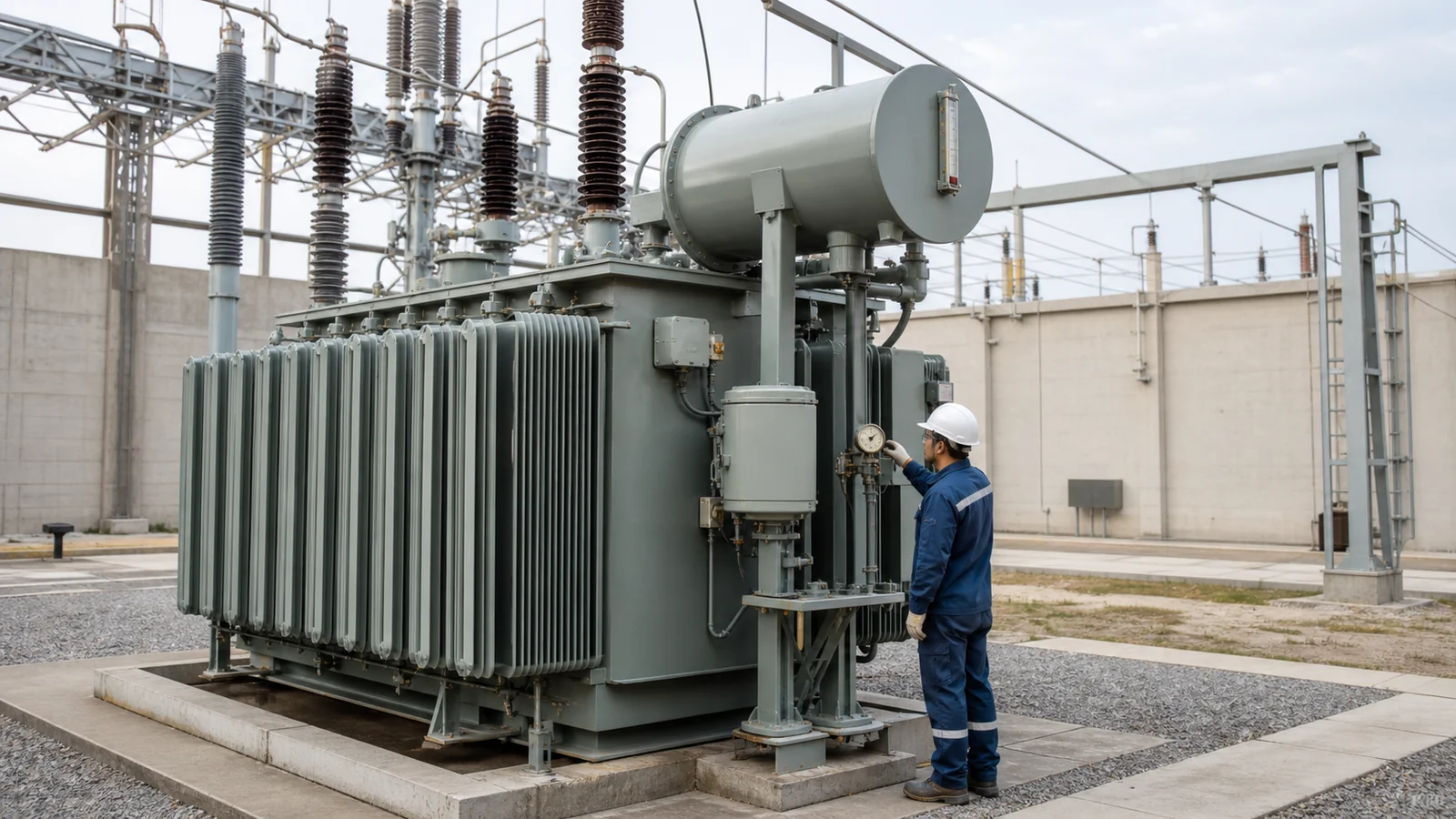
Transformer Oil Preservation RFQ: Conservator or Sealed Tank
An oil-immersed transformer does more than hold oil inside a tank. The oil has to expand and contract with temperature, stay reasonably protected from moisture and air where the design requires it, remain visible to operators, and leave a traceable path for inspection and maintenance. If the RFQ only says “oil-filled transformer, standard accessories,” the buyer may not know whether the quotation assumes a conservator, sealed tank, breather, diaphragm, oil level gauge, pressure relief device, sampling valve, or site filling work.
The short answer is: ask the supplier to define the oil preservation system before comparing prices. State whether the project expects a conservator-type arrangement, sealed tank concept, or another specified design; request drawings showing oil level devices, breathers or sealing devices, pressure protection, valves, sampling points, transport condition, maintenance access, and handover documents. Final suitability remains subject to the project specification, supplier datasheet, factory test report, local code, utility requirements, AHJ review, and qualified engineering confirmation.
This article is for overseas factories, EPC teams, utilities, mines, industrial parks, commercial buildings, and renewable-energy projects preparing RFQs for oil-immersed transformers. It does not select the transformer liquid, approve oil test limits, design fire or environmental protection, or replace the owner engineer’s maintenance program.
Oil preservation is a purchase boundary
Oil preservation describes how the transformer accommodates oil expansion and controls, reduces, or manages contact between the insulating liquid and outside air. In practice, buyers will often see two broad project assumptions: a conservator-type transformer with an expansion tank and related accessories, or a sealed-tank style design where the tank system is intended to handle expansion without an open conservator arrangement. The exact naming, construction, and accessory package depend on the standard, manufacturer design, rating, market, and project specification.
That choice affects more than appearance. It can change the outline drawing, shipping height, lifting route, oil quantity documentation, visible inspection points, breather maintenance, alarm contacts, pressure relief devices, site filling procedure, and spare parts. It may also affect how the owner plans routine checks after energization.
A conservator-type oil-immersed transformer can be the right fit for many utility and industrial applications, but it should not be ordered by name alone. The RFQ should still define the required accessories and evidence. A sealed arrangement can reduce some visible accessory work, but “sealed” should not be read as “nothing to inspect.” The project still needs oil level, pressure, leakage, temperature, transport, and maintenance checks based on the final supplier documents.
RFQ matrix for oil preservation scope
Use this matrix to expose assumptions before the purchase order is released. It is not a universal design rule.
| RFQ item | What the buyer should state or request | Why it changes the order |
|---|---|---|
| Preservation concept | Ask the supplier to state the proposed oil preservation system: conservator, sealed tank, diaphragm or bladder arrangement if used, or project-specified alternative. | Quotations are not equivalent if one includes conservator accessories and another assumes a different tank system. |
| Outline and access | Request drawings showing conservator or tank shape, gauges, valves, breather position if applicable, pressure devices, lifting points, access route, and removal clearance. | A transformer may fit the foundation while the oil system, gauges, or maintenance access does not fit the room or yard. |
| Breather or sealing parts | Define whether silica gel breather, maintenance-free breather, diaphragm, bladder, air cell, or other sealing parts are included, and who supplies spares. | Breather and sealing assumptions affect maintenance, storage, and accessory responsibility. Avoid generic “standard breather” language. |
| Oil level and pressure indication | Request oil level gauge type, visible range, alarm contacts if required, pressure relief device data, and terminal list for any contacts. | Operators need a clear way to recognize abnormal oil level or pressure conditions. Related signals should align with the accessory and alarm contact checklist. |
| Oil quantity and liquid specification | Ask for oil volume, liquid type, filling status for shipment, compatibility notes, and whether final filling or topping-up is by supplier, EPC, or owner. | Oil procurement, customs documents, spill planning, storage, and commissioning tests can all depend on the shipped condition. |
| Sampling and maintenance points | Confirm sampling valve location, drain valve, filter or filling connection, safe access, and required manuals. | Oil test programs depend on practical sampling access. Do not assume every valve shown on a sketch is usable after installation. |
| Transport and storage condition | State whether the unit ships oil-filled, partially filled, nitrogen-blanketed, or otherwise prepared, subject to supplier documents and project transport rules. | Receiving teams need to know what pressure, oil level, seals, valves, and gauges should look like on arrival. |
| Evidence and hold points | Request final datasheet, oil system drawing, accessory schedule, valve list, terminal list, factory test report, packing list, preservation instructions, and approved-deviation log. | The site team needs traceable evidence before storage, installation, oil sampling, and first energization. |
Conservator-type transformers need clear accessory ownership
For a conservator arrangement, the RFQ should identify the conservator tank, connection pipework, oil level indicator, breather or air-separation device if used, valves, gauges, drain or sampling points, pressure relief equipment, and any alarm or trip contacts required by the project.
The common mistake is to treat those items as minor accessories. They can become late disputes because one party assumes the oil level contact is included, another assumes it is optional, and the site automation team expects a terminal that was never specified. If remote indication is required, ask for the terminal box location, contact type, wiring diagram, and whether signals are alarm-only or part of a trip scheme. Protection logic and trip decisions must be approved by the project protection engineer.
Maintenance access also matters. A breather mounted too high, a gauge hidden behind a fence, or a sampling valve blocked by a wall turns a simple routine check into a shutdown problem. The outline drawing should be reviewed together with platform, fence, fire wall, oil containment, drainage, radiator cleaning, cable box, and truck access constraints.
Sealed tank does not remove maintenance questions
Some projects prefer a sealed or hermetically sealed style because it may reduce direct oil exposure to ambient air and simplify visible accessory maintenance. That can be useful where the final design, rating, service conditions, and local specification support it. The buyer should still avoid shorthand such as “maintenance-free oil system.”
Ask how expansion is accommodated, which pressure or vacuum limits are relevant to shipment and operation, how oil level or tank condition is checked, what pressure relief device is included, whether a gas or pressure indicator is provided, and how the unit should be inspected after transport. If the supplier ships the transformer under a specified pressure or sealed condition, the receiving team needs acceptance limits or at least a documented normal range from the supplier.
Sealed construction also does not cancel site obligations. Leakage checks, oil or insulation tests required by the project, tank grounding, valve position, accessory wiring, room ventilation, fire and environmental rules, and commissioning approvals still belong in the project handover package.
Oil documents should follow the transformer through handover
Standards help name the issues, but they do not create one global default. IEC 60076-1:2011 is a general IEC reference for power transformers and its edition summary includes requirements for liquid preservation systems among other additions. IEC 60296:2020 covers specifications and test methods for mineral insulating oils supplied for electrical equipment under its scope. IEC 60422:2024 provides supervision and maintenance guidance for mineral insulating oils in electrical equipment where oil sampling is reasonably practicable.
Those references are not interchangeable with IEEE, ANSI, NEMA, GB/GB/T, utility, mining, renewable interconnection, fire, environmental, or local AHJ requirements. The applicable market and project documents decide the final standard basis, oil test schedule, acceptance criteria, and maintenance responsibilities.
The oil preservation file should travel with the equipment. At receiving, compare nameplate, shipping documents, valve positions, gauges, pressure indication, seals, visible leaks, accessory boxes, and preservation instructions with the approved documents. The broader receiving inspection and temporary storage checklist is useful at this stage. Before energization, oil level, valves, pressure devices, breathers or seals, grounding, protection signals, and required site tests should be closed under the project procedure; see the pre-energization checklist for that handover logic.
RFQ wording buyers can adapt
“Please state the proposed oil preservation system for the quoted transformer, including conservator or sealed tank concept, breather or sealing arrangement, oil level indication, pressure relief, valves, sampling points, alarm contacts, and maintenance access.”
“Submit outline drawing, oil system drawing, accessory schedule, valve list, terminal list, oil quantity, shipped filling condition, preservation instructions, factory test report, packing list, and approved-deviation log before manufacturing release.”
“If the transformer ships oil-filled, partially filled, gas-blanketed, or under a specified sealed condition, state the receiving checks and acceptable indication range to be used by the warehouse or site team, subject to the final supplier manual.”
“Final oil tests, sampling procedures, acceptance limits, fire and environmental requirements, and maintenance intervals must follow the project specification, applicable market standards, local rules, utility requirements, AHJ review, and qualified engineering judgment.”
A practical release rule
Do not release an oil-immersed transformer order if the oil preservation system is described only as “standard.” Before manufacturing is frozen, the buyer should be able to point to one approved document set showing the tank or conservator arrangement, oil level and pressure devices, breather or sealing parts, valves, sampling access, shipment condition, alarm contacts if required, and evidence to be checked at arrival.
That rule does not make procurement responsible for oil chemistry or transformer design. It makes one critical interface visible early enough for the supplier, EPC, owner, and commissioning team to agree on what is actually being bought.
