
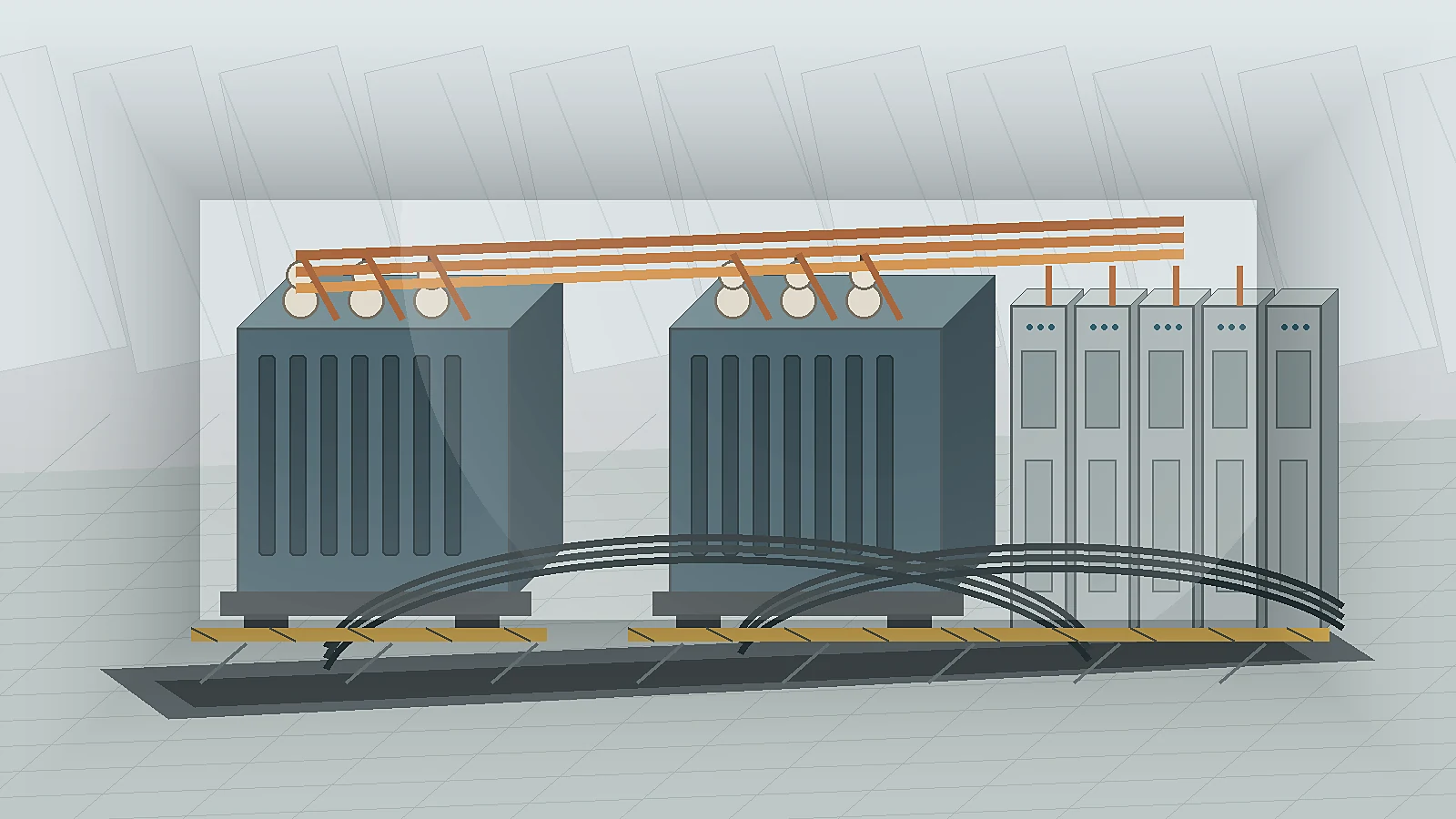
Can New and Existing Transformers Operate in Parallel?
Adding a second transformer looks like a simple way to increase plant capacity: keep the existing unit, install a new one beside it, close a bus coupler, and share the load. In some projects that is a workable plan. In others it can create circulating current, uneven loading, higher fault current, nuisance trips, or a commissioning delay.
The short answer is: new and existing transformers can operate in parallel only when their electrical characteristics, switching arrangement, protection scheme, grounding method, and operating rules are compatible for the specific project. A matching kVA rating or a similar voltage label is not enough.
For buyers, the useful question is not “Can transformers be paralleled in general?” It is “What information must be checked before we ask a supplier to quote a transformer intended to run with an existing unit?” This article gives procurement teams, EPCs, factory engineers, and facility owners a practical checklist. It does not replace a registered electrical engineer, utility review, local AHJ approval, or the commissioning tests required by the project specification.
Parallel operation is not only a transformer purchase
Parallel operation affects the whole low-voltage or medium-voltage distribution system. The transformer is only one part of the decision. The switchgear bus, circuit breakers, protection relays, neutral grounding, cable routes, interlocks, metering, load-shedding logic, and operating procedures may all need review.
This is especially important in brownfield projects. The existing transformer may have an old nameplate, incomplete drawings, changed tap settings, aging insulation, or downstream switchgear that was sized for one source only. Before a new oil-immersed transformer or dry-type transformer is quoted for parallel duty, the project team should confirm whether the installation will run in true continuous parallel, temporary emergency parallel, or only alternate supply through a mechanically or electrically interlocked tie.
If the intention is only to transfer load during maintenance, the design may be different from continuous parallel service. That distinction should be written into the RFQ.
Compatibility checks buyers should request
The table below is not a design approval checklist. It is a practical RFQ and document-review checklist that helps buyers know what to ask for before the order is placed.
| Check item | Why it matters | What the buyer should provide or confirm |
|---|---|---|
| Rated primary and secondary voltage | Transformers must present compatible voltage at the common bus. A small mismatch can drive circulating current even before useful load is supplied. | Nameplate photos, approved drawings, measured or recorded service voltage, and required tap position. |
| Vector group and phase sequence | Phase displacement must be compatible. The wrong connection relationship can make parallel closing unsafe. | Existing transformer vector group, phase rotation record, single-line diagram, and project standard. |
| Impedance and kVA | Load sharing depends strongly on impedance and rating. A unit with lower impedance can take more than its intended share. | Existing impedance from nameplate or test report, proposed transformer impedance, expected load profile, and allowable loading policy. |
| Tap range and tap control | Different tap positions or control logic can cause voltage mismatch. OLTC and off-circuit tap units need especially careful operating rules. | Current tap setting, tap range, whether each transformer has off-circuit taps or on-load tap changing, and who controls tap changes. |
| Neutral and grounding arrangement | Ground-fault behavior and protection settings depend on the system grounding method. | Grounding diagram, neutral connection, earthing resistor or solid grounding details if used, and local code requirements. |
| Switchgear and bus rating | Parallel transformers can raise available short-circuit current at the bus. Existing equipment may no longer have adequate interrupting or withstand rating. | Switchgear nameplate data, breaker ratings, busbar rating, relay settings, and the latest fault-level study. |
| Protection coordination | Two sources feeding one bus can change fault current direction and magnitude. Protection may need new settings or additional interlocks. | Relay types, current transformer ratios, protection philosophy, utility requirements, and commissioning test plan. |
| Operating mode | Continuous parallel, emergency tie, load transfer, and standby service are different engineering cases. | Written operating scenario, interlock requirement, maintenance procedure, and who is authorized to close the tie. |
The short-circuit item deserves special attention. When two transformers feed the same bus, the downstream fault level may increase compared with one transformer alone. Our guide on transformer short-circuit current and switchgear rating explains why switchgear data should be reviewed before a transformer upgrade. The related guide on transformer impedance and motor starting voltage dip covers the other side of the same impedance decision: voltage stiffness during large starts.
What should be included in the RFQ
If a transformer may operate in parallel with an existing unit, the RFQ should say so plainly. Do not hide the condition in a drawing note or assume the supplier will infer it from a one-line diagram.
At minimum, include:
- the existing transformer nameplate photo and serial number;
- the existing transformer factory test report, if available;
- rated capacity, voltage ratio, frequency, vector group, impedance, cooling method, and tap data;
- actual tap position used on site;
- single-line diagram showing upstream supply, transformer incomers, bus coupler, outgoing feeders, and metering;
- switchgear and breaker ratings on the common bus;
- grounding method and neutral arrangement;
- expected operating mode: continuous parallel, temporary parallel, open-transition transfer, standby, or future provision only;
- load profile, large motor starting information, and major nonlinear loads such as drives or rectifiers;
- local utility, AHJ, IEC, IEEE, GB/T, ANSI, NEMA, DOE, EU Ecodesign, or other project-standard requirements where applicable.
Some projects will also need recent site test data for the existing transformer before a supplier can responsibly comment on parallel suitability. Visual condition, insulation condition, oil condition for oil-filled units, winding resistance, ratio, polarity, vector group verification, protection test records, and breaker maintenance status should be handled by qualified personnel according to the project specification.
For equipment that has just arrived on site, keep the document trail intact. The receiving-stage checks in our transformer receiving inspection and temporary storage checklist help protect the nameplate, test report, accessories, and condition evidence that later become important during commissioning.
Warning signs that need engineering review before ordering
Some situations do not automatically prevent parallel operation, but they should stop a buyer from treating the purchase as a routine replacement.
First, the existing transformer data may be incomplete. If the vector group, impedance, tap range, or test report is missing, the project team should recover the information from site testing, original drawings, or the manufacturer before placing an order.
Second, the existing and proposed transformers may have different control behavior. A transformer with on-load tap changing and a transformer with off-circuit taps can sometimes be part of the same system, but only with a clear control philosophy. Poor tap coordination can produce avoidable circulating current or uneven load sharing.
Third, the downstream system may not be rated for the new fault level. The new transformer might be electrically compatible with the old transformer, while the switchgear is not compatible with the combined source capacity. This is a common brownfield risk because existing panels may have been selected around the original transformer only.
Fourth, the operating team may not actually need continuous parallel service. In many factories, the real requirement is maintenance bypass, partial redundancy, or staged expansion. Those cases may call for different switchgear interlocking and protection settings than a continuously paralleled bus.
Finally, product type does not solve the compatibility question by itself. Oil-immersed, cast-resin dry-type, compact substation, and switchgear layouts can all be used in appropriate projects, but parallel operation depends on the electrical system design. If a compact outdoor arrangement is preferred, the compact substation layout must still be checked for cable access, bus arrangement, earthing, ventilation, metering, and utility interface.
External standards are references, not universal answers
Standards provide a common engineering language, but they are not interchangeable across markets. IEC 60076-1 is a common reference for general power transformer requirements where IEC standards are specified. Short-circuit studies may use frameworks such as IEC 60909-0 where that standard is adopted by the project. Other markets may specify IEEE, ANSI, NEMA, GB/T, utility-specific, DOE, EU Ecodesign, or local regulatory requirements.
The buyer’s role is to make sure the RFQ identifies the applicable market and project standard. The final answer should come from the approved datasheet, test report, protection study, local code, utility requirements, and commissioning procedure, not from a generic web article.
A practical decision rule
Do not approve a transformer purchase for parallel service until the project team has written confirmation on seven points:
- voltage ratio and tap position are compatible for the intended operating mode;
- vector group, phase sequence, and polarity have been verified;
- impedance and kVA relationship support acceptable load sharing;
- tap control philosophy is defined, especially if OLTC is involved;
- combined short-circuit current has been checked against switchgear and cable ratings;
- protection coordination, grounding, and interlocks have been reviewed;
- commissioning tests and operating procedures are specified before energization.
If any of these points is unknown, the safer procurement action is to request clarification before finalizing the transformer design. Parallel operation can be useful, but only when the transformer purchase is treated as part of a complete distribution-system decision.
