
Transformer Seismic Design RFQ: What Buyers Must Confirm
In a seismic project, a transformer is not made suitable merely by adding a line such as “seismic rated” to the RFQ. The transformer, its base frame, anchors, concrete or steel support, connected buswork and cables, adjacent switchgear, and the project seismic design basis have to describe the same installation.
The practical procurement answer is: provide the project-defined seismic inputs and ask suppliers to state exactly what their supplied equipment, mounting provisions, qualification evidence, and exclusions cover. The civil and electrical engineers must then coordinate the anchorage and connections against the approved design. Final suitability is subject to the local seismic code, project specification, utility or owner requirements, approved drawings, final supplier datasheet, test or qualification documents, and review by qualified professionals. This article helps buyers close an RFQ gap; it does not design restraints, select anchors, certify a building, or authorize installation.
Start with the performance question, not a generic label
“Seismic compliant” can hide several unanswered questions. Is the requirement about preventing overturning, maintaining an electrical function after a defined event, protecting a specific essential facility, satisfying a utility specification, or documenting a qualification method? The answer changes the information the project must issue and the evidence a supplier can reasonably provide.
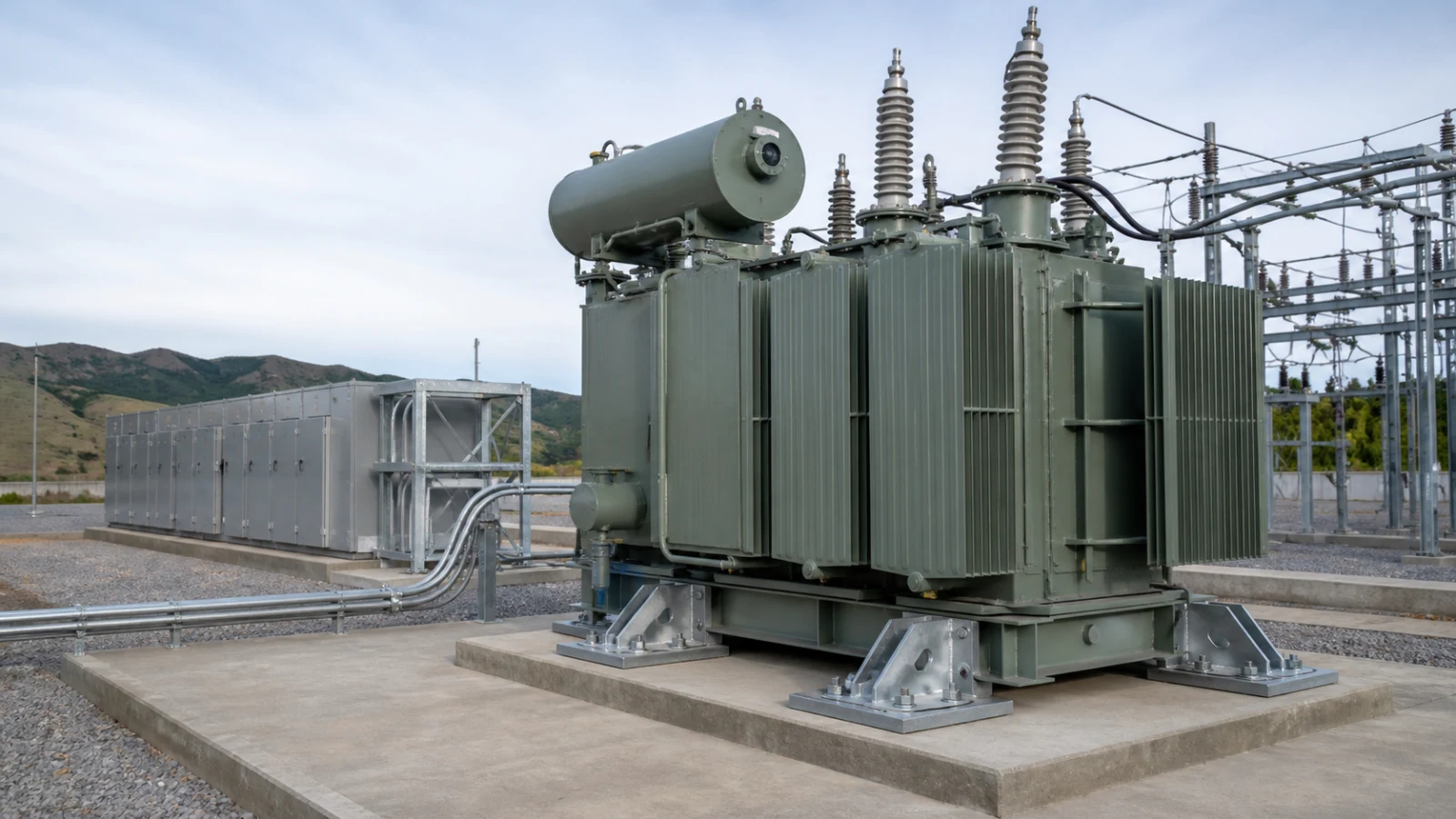
For example, a transformer installed outdoors on a project-designed pad has a different interface from a dry-type transformer in a multi-storey electrical room or a compact substation supplied as a package. Floor motion, support structure, equipment orientation, centre of gravity, base-frame arrangement, cable or bus connections, and required post-event operation can all matter. They should be treated as design inputs, not catalogue assumptions.
In IEEE-based substation work, IEEE 693 addresses seismic design and qualification of substation equipment, installation methods, and documentation within its scope. It is not a universal purchase label or a substitute for the applicable local code. Likewise, FEMA’s P-58 guidance discusses anchorage as a key fragility issue for MEP equipment; it does not provide a ready-to-copy anchor layout for a specific transformer.
The RFQ should separate project inputs from supplier evidence
Use the following matrix to expose responsibility gaps before bid comparison or drawing release. It is a coordination tool, not a design calculation or an acceptance criterion.
| RFQ item | Project team should provide or decide | Supplier should state or submit | Why the boundary matters |
|---|---|---|---|
| Applicable seismic basis | Governing jurisdiction, project specification, utility or owner rule, required code/standard edition, facility importance and approval path. | Which stated requirements the quotation is intended to address, and any deviations or assumptions. | IEC, IEEE, ANSI, GB/GB/T and local rules are not interchangeable global defaults. |
| Design input | The engineer’s required seismic design parameters, support condition, installation elevation/floor, equipment orientation and required performance objective, in the format the project uses. | Required input format, any input not received, and whether the offer is preliminary pending review. | A supplier cannot safely infer a project’s design event from country name or equipment rating. |
| Equipment configuration | Exact transformer type, accessories, bushing/cable-box arrangement, cooling equipment, control cabinets, switchgear line-up and package boundaries. | Final outline, mass, centre of gravity, base frame, mounting or restraint provisions, and configuration-specific limitations. | Added radiators, cable boxes or control cabinets can change geometry and restraint interfaces. |
| Anchorage and support | Responsible civil/structural engineer, pad or floor design, reinforcing and embedment concept, anchor responsibility, tolerances and site verification route. | Base-frame and mounting-point information, reactions or loads only where contractually required and supported by the final design, and any supplier-supplied hardware. | Equipment supply does not automatically include a project-designed anchorage system. |
| Connected conductors | Busduct, busbar, cable, conduit and control-cable routes; flexible-connection intent; support ownership; required clearances. | Terminal locations, allowable interface details where specified, cable-box or busduct drawings, and connection exclusions. | Rigid connections can transmit movement or conflict with required clearances; the final connection design needs engineering review. |
| Functional scope after an event | Whether the owner requires physical stability only, inspection before return to service, continued operation, or a defined recovery procedure. | What, if any, equipment-specific qualification or documentation addresses that requirement. | “No visible damage” and “operable after an event” are not the same procurement requirement. |
| Evidence and hold points | Required submittal list, reviewers, release milestones and who approves installation details. | Datasheet, outline, mounting drawings, qualification/test documentation if offered or specified, certificate scope, exclusions, packing and installation instructions. | The bid, drawings and handover file must describe the same delivered configuration. |
Do not let the transformer and switchgear be evaluated separately
The transformer restraint decision is connected to the rest of the electrical package. A restraint arrangement can conflict with bottom cable routes, oil-containment walls, access doors, radiator removal space, or a transformer cable box. On a transformer-to-LV connection, the project should review the movement allowance and support strategy for busduct, busbar or cables instead of assuming an equipment drawing resolves the complete interface.
For a transformer feeding switchgear, include the switchgear base, adjacent sections, cable trench, control wiring, grounding connections and any required separation joint in the same drawing review. Electrical ratings still require their own study. Seismic restraint is not proof of short-circuit withstand, arc-flash performance, protection coordination or grounding adequacy; those issues remain subject to the project studies and approved documents. The short-circuit current and switchgear rating checklist is a useful companion for keeping those decision paths separate.
What to collect before a bid becomes an order
Ask each bidder to identify the exact offered configuration and the assumptions behind its seismic statement. A proposal that uses generic product-family language but no final outline drawing, base detail or exclusion list is usually too weak to freeze a civil interface.
Before manufacturing release, the controlled project file should normally show:
- the approved single-line diagram and general arrangement, with equipment tags that match the RFQ;
- the applicable seismic design basis and the professional responsible for applying it;
- the supplier’s current outline drawing, installed mass, centre of gravity, base frame, mounting points and accessory arrangement;
- the civil or structural drawing that defines the actual support, anchorage, restraint and site tolerances;
- transformer, switchgear, busduct, cable, control and grounding interface drawings, with ownership clearly stated;
- any qualification, test, calculation, certificate or deviation record actually required by the project, linked to its scope and revision; and
- installation, inspection and post-event review responsibilities.
This is deliberately an evidence list, not a promise that every supplier produces the same certificate or test report. A project should request only the documents its governing requirement calls for, then check whether the offered evidence applies to the final configuration rather than to a visually similar unit.
Installation details can invalidate a good procurement file
Even a well-written RFQ cannot make up for an installation that departs from the approved interface. Field substitutions in anchors, shims, restraints, flexible connectors, cable supports or equipment orientation should be routed back through the responsible project process. Do not regard a delivery drawing as permission to change the civil design in the field.
The transformer foundation and mounting RFQ guide covers the wider plinth, rails, access and drawing-coordination process. In a seismic zone, add the project seismic basis and restraint details to that same release gate. For packaged equipment, also check whether enclosure panels, doors, internal equipment and external cable entries are within the stated seismic scope, rather than assuming the transformer claim covers the whole package.
Site work, inspection and energization need their own approved procedures. Safe isolation, access, post-event inspection, grounding, fire protection, oil containment, recommissioning tests and return-to-service authority must follow the project plan, local requirements and qualified personnel. A seismic event does not make a general website checklist an operating instruction.
RFQ wording buyers can adapt
State the applicable seismic design basis, project location/jurisdiction, required performance objective, responsible engineering party, equipment installation support, and approval path. Where the project design inputs are not final, identify them as open items and do not assume a standard seismic level.
Submit configuration-specific outline and mounting information, including installed mass, centre of gravity, base-frame or mounting-point detail, accessory arrangement, terminal/cable-box positions, and all exclusions. Identify whether any restraint hardware is supplied and which party designs and installs anchors, supports and flexible connections.
If seismic qualification, testing, calculation, certification or installation documentation is offered or required, state its exact scope, configuration, reference basis, revision and exclusions. Compliance with one market’s code or standard shall not be assumed to demonstrate compliance elsewhere.
Final equipment selection, anchorage, civil works, connected conductors, grounding, protection, inspection and return to service remain subject to approved project documents, the applicable code and utility requirements, supplier instructions, and qualified engineering and commissioning review.
A practical release rule
Do not release the transformer or switchgear package while “seismic” appears only as a tick-box. Release it when one approved document set identifies the governing design basis, final equipment configuration, support and anchorage responsibility, connected-conductor interface, required evidence, and installation hold points. That keeps a seismic requirement where it belongs: in the coordinated project design, rather than in an untestable promise on a quotation.
