
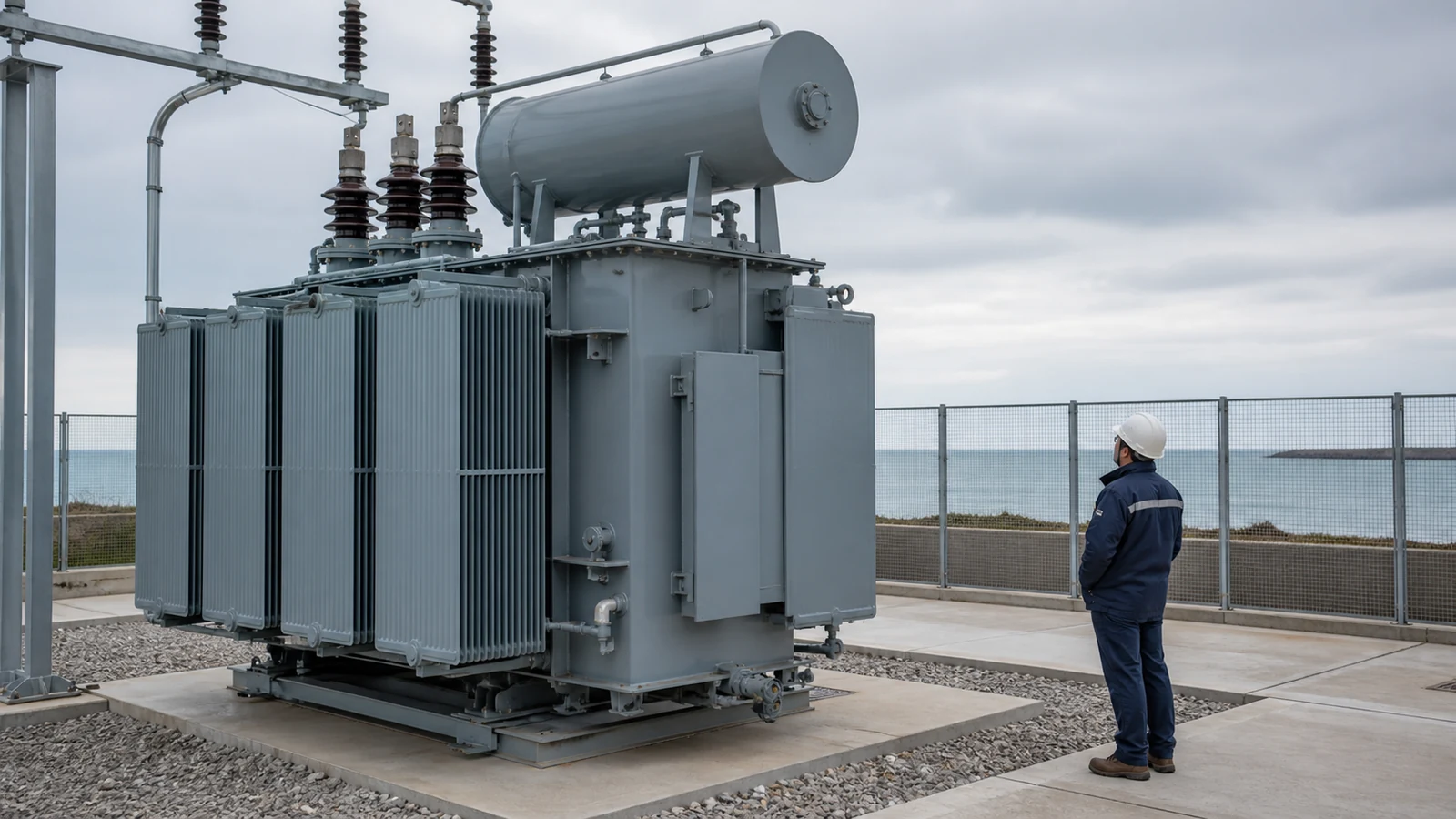
Transformer Coating RFQ: Corrosion Checks Before Ordering
A transformer can be electrically suitable yet arrive with a coating scope that does not fit the site exposure, the owner’s inspection process, or the interface between supplied equipment and site work. The practical answer is to make corrosion protection a controlled RFQ item: describe the actual exposure, name the steelwork and accessories in scope, request a proposed system and evidence, and record every assumption or exclusion before production release.
This guide is for owners, EPC teams, factories, utilities, mines, commercial facilities, and renewable-energy projects sourcing an oil-immersed transformer, dry-type transformer, compact substation, or associated switchgear. It is not a coating design, a corrosion survey, a fire assessment, or an acceptance authorization. The final coating system, preparation, inspection points, repairs, compatibility with insulating liquid, local environmental controls, and acceptance criteria must be confirmed by the approved project documents, supplier data, applicable market standards, site conditions, and responsible engineering and quality personnel.
Start with the exposure, not a paint colour
“Outdoor, grey finish” is rarely enough to compare bids. An outdoor transformer beside the sea, a shaded process plant, a desert site with abrasion, and a conditioned indoor electrical room can each create different questions. The RFQ should not try to diagnose an environment remotely; it should pass the project’s known exposure data to every bidder and make unknowns visible.
Ask the project team to provide the following inputs with the layout drawing:
- Installation location and whether the equipment is indoor, outdoor, covered, enclosed, coastal, industrial, dusty, wash-down exposed, or otherwise subject to a documented local condition.
- Expected atmospheric contaminants, standing-water or splash exposure, condensation risk, ultraviolet exposure, cleaning chemicals if any, and temperature limits where the project has defined them.
- The owner or EPC corrosion specification, chosen standard basis, expected maintenance philosophy, and any required colour, marking, or touch-up restrictions.
- Interfaces that affect the finish: oil-containment works, foundations, cable boxes, supports, fences, site-applied labels, field joints, and third-party skids or enclosures.
The site-conditions RFQ guide is a useful companion for recording environmental and access assumptions. It should not be used to assign a corrosion category without the project’s responsible review.
Turn one generic requirement into a reviewable scope
The same quotation can contain a tank coating, a radiator finish, loose-painted steelwork, bought-out components, and site repairs—each with different ownership. A short scope matrix makes gaps easier to see.
| Scope area | Buyer should define or ask for | Common gap to expose |
|---|---|---|
| Main transformer surfaces | State the project exposure and request the proposed preparation and coating-system description, colour reference where required, and excluded faces or interfaces. | “Standard paint” appears in the quotation with no stated basis or coverage boundary. |
| Radiators, conservator and removable steel parts | Confirm whether these parts receive the same system, how shipped loose parts are protected, and who supplies touch-up material if required. | Separate parts arrive with a different finish or no defined field-repair route. |
| Cable boxes, marshalling boxes and accessory supports | Identify supplied enclosures, mounting brackets, gland plates, fastening hardware, external earthing points, and any third-party item that is excluded. | The tank is covered by a statement but attached steelwork is not. |
| Compact-substation enclosure or switchgear housing | Specify whether the request covers the complete package or only the transformer; define doors, bases, louvers, joints and site connections. | Each package supplier assumes the civil or enclosure interface belongs to another party. |
| Site damage and repair | State the required notification, repair-proposal, inspection and record process after transport, installation, drilling, welding, or coating damage. | Damage is noticed at handover but the contract has no agreed evidence or decision path. |
For an integrated package, use the compact-substation interface checklist to identify which enclosure, transformer and switchgear surfaces belong to which supply boundary. For an oil-filled installation, the coating discussion must also align with the project’s oil-containment and drainage interface; neither topic determines the other.
Ask for evidence that can be compared
The buyer does not need to prescribe a paint brand in order to request a clear proposal. Before order release, ask the bidder to submit an asset- and revision-linked coating schedule. It can identify the proposed system, surface-preparation basis, areas covered, inspection or hold points if contractually required, repair materials or method, curing/handling limitations where relevant, and exclusions.
Where the project names ISO 12944, apply the cited part and revision only as the project requires. ISO 12944-3 addresses design considerations for steel structures to help avoid coating or structural deterioration and includes handling and transport considerations. ISO 12944-4 covers types of steel surfaces and surface preparation. ISO 12944-7 addresses execution and supervision of paint work in workshop or on site. These publications do not select a transformer coating for every market or site, and a reference to ISO does not replace the owner’s specification, a materials review, local environmental requirements, or an agreed inspection and acceptance plan.
For bid comparison, place the final coating schedule beside the data sheet and outline drawing. The transformer quotation comparison guide can help distinguish a clarification—such as a missing system description—from a deviation, such as a different exposure basis, repair responsibility, or excluded surface.
Make site repairs a defined handover issue
Transport restraints, lifting, cable installation, foundation hardware, and field accessories can damage a finish. That does not automatically mean the equipment is unacceptable; it means the event should enter the project’s controlled record. The project should define who may assess damage, who proposes a repair, what evidence is required before and after the repair, and who accepts the outcome. Those decisions belong to the qualified project parties, not to a generic web checklist.
At factory review and receiving inspection, compare the offered scope with the actual equipment, loose parts, packing, and drawings. The FAT and shipment checklist and receiving-inspection guide can support that handoff. They do not replace a coating inspection procedure or safe site work controls.
RFQ wording buyers can adapt
The bidder shall state the proposed corrosion-protection and coating scope for the offered equipment, including all transformer steel surfaces, radiators, conservator where supplied, accessory supports, cable or marshalling enclosures where supplied, loose parts, and all exclusions. State the project inputs and standards used as the basis of the proposal.
Before production release, submit a controlled coating schedule linked to the final data sheet and outline drawing. Identify the surface-preparation basis, coating-system description, colour if specified, covered areas, inspection evidence proposed or required by the contract, handling limitations, repair procedure and materials where applicable, and every interface or exception.
Transport, lifting, installation, drilling, welding, contamination, or other damage that affects the supplied finish shall be recorded and referred to the project-defined repair and acceptance process. Site repair, environmental controls, inspection, and release authority are excluded unless expressly included in the agreed scope.
A simple release rule
Do not release a transformer or compact-substation package on a generic “standard paint” statement when site exposure or supply boundaries are material. Release when the project has an approved exposure basis, a controlled scope and drawing set, a documented proposed coating system, a clear inspection/repair route, and an owner for every exception. Final suitability remains subject to the project documents, supplier instructions, applicable standards, local code, utility/AHJ requirements, and responsible engineering review.
